
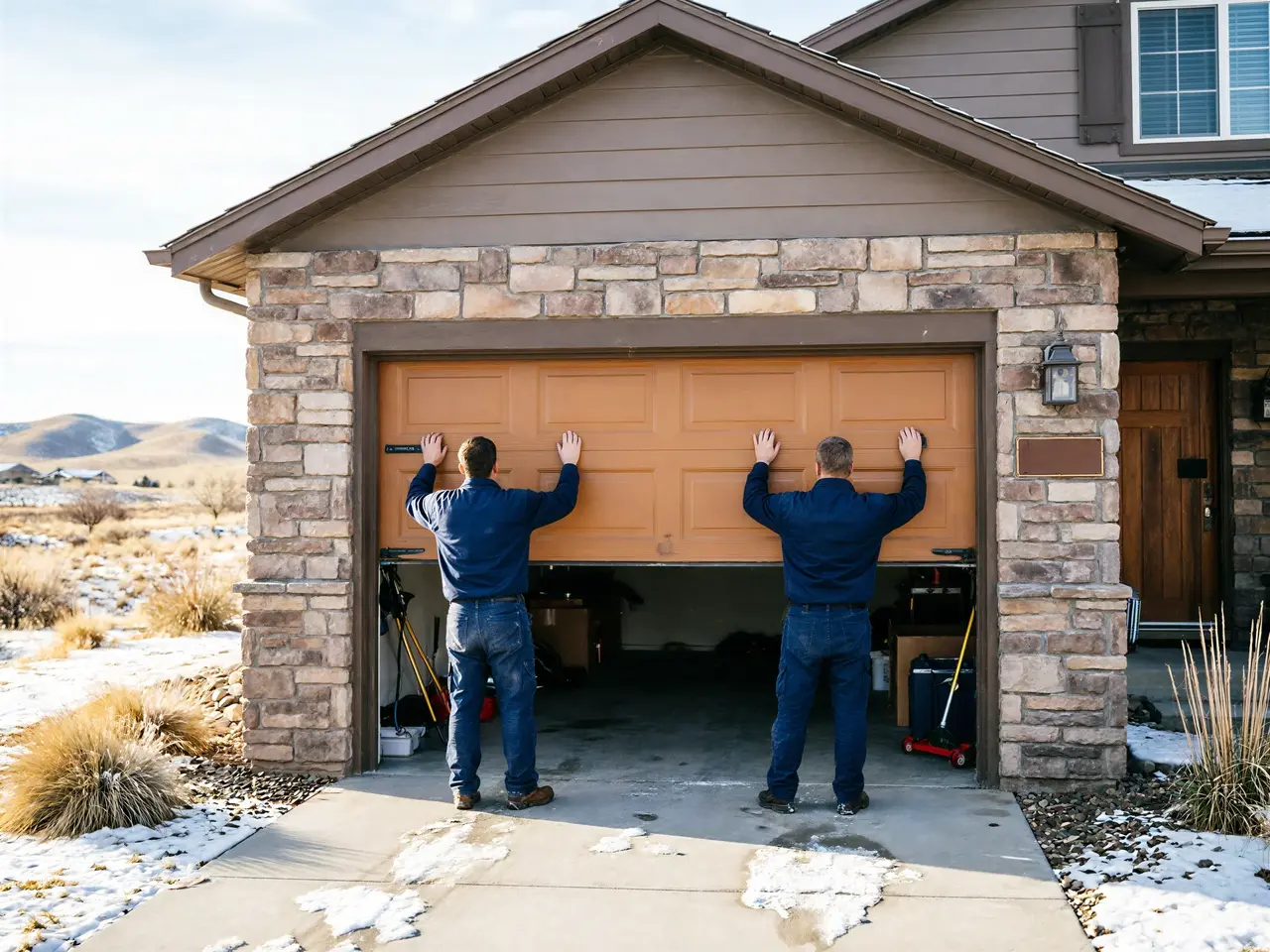
Greeley, CO · Garage Door Service
Garage Door Installation Built for Greeley's Climate and Homes
Greeley's housing dates mostly to 1975-2012, and winters run cold and severe. We install garage doors sized for this area's homes, climate, and lot layouts.
- Repairs & new doors
- Springs & openers
- Serving 5 nearby communities
Stocked Parts
Most houses in our service area went up between 1975 and 2012, with the bulk of that stock dating to the 2000s - original builder-grade doors sized for a market that's aging out of warranty now. We stock torsion springs, nylon rollers, and openers matched to the standard 16-foot and 9-foot openings that builders used across that run of construction, because that's what's on the trucks for most installs we do.
What we don't carry on the shelf are oversized custom doors or non-standard track kits for the handful of older or architect-built homes that sit outside that 2000s pattern. If your opening doesn't match the common sizing from that build era, expect us to order the panel rather than swap it same-visit. We'd rather tell you that up front than have you wait on a truck that doesn't have what your garage needs.
Because so much of the area's housing landed in a narrow 37-year window, the parts that move fastest for installs here are the same half-dozen opener models and spring weights, over and over. That's not true everywhere, but it's true in a service area built mostly in one generation.
How It Shows Up
Greeley sits in a cold, severe climate band, and that changes how a door fails compared to a milder zone. Grease that's fine in October gets thick by January, and a track that was square in summer can bind half an inch when the slab underneath contracts in a hard freeze. On doors original to the 1975-2012 building boom, that shows up as a door that lifts rough on the first cold morning, an opener that strains and clicks off on its safety sensor, or a bottom panel that won't seal flush once the weather turns.
It's less a single dramatic failure and more a door that gets a little worse every winter until the owner decides it's time to replace rather than patch again. We see it most on doors that are original to the home - same springs, same rollers, same opener the builder put in. A new install with hardware rated for sub-zero mornings doesn't eliminate winter, but it stops the door from fighting the cold every single day the way a 20-year-old setup does.
What You Pay
We're not going to hand you a number here that doesn't hold up once we see your opening, because installation cost moves with door size, insulation level, and opener choice, not with a flat rate. What does affect the decision locally: median household income across the area runs $103,356, and most owners we quote are choosing between a mid-grade insulated steel door and a higher-end option, not between a cheap door and a mid-grade one. That shapes what we keep quoted and in stock.
Insulation matters more here than it would in a milder climate band - a door with a real R-value core keeps an attached garage workable in winter, where an uninsulated panel just transfers the cold straight through. Opener choice is the other lever: a basic chain-drive costs less up front, a belt-drive runs quieter, and neither one is the wrong answer, it depends on whether the garage sits under a bedroom.
The one thing we won't do is quote a number sight unseen over the phone and then change it at the door. We measure the opening, check headroom and track clearance, and give you the real figure before anything gets ordered.
Why It Happens Here
With 30,140 owner-occupied houses across 44,922 households in the area, most of the doors going up now are replacements on homes built in that same 1975-2012 window, not new construction. That's the core of it: a lot of the original stock is reaching the point where the door, the springs, and the opener are all original equipment at once, and a cold, severe winter is what finally exposes it.
The climate does the rest of the work. A door that's merely tired in a mild zone is often one that's actually failing here, because the swings between a warm fall afternoon and a hard freeze stress hardware that's already past its service life. We run trucks out to Evans, Severance, Eaton, Milliken, Windsor, Gilcrest, Kersey, Johnstown, Ault, Berthoud, Platteville, and Mead, and every one of those jobs still starts with a door sized to this region's cold-climate code, not a generic catalog pick. The pattern is the same across all of them: 2000s-era construction, cold winters, and a door nearing the end of what its original hardware was built for.
Frequently asked questions
How do I know if I need a new door or just a repair?
If the door is original to a house built in that 1975-2012 wave and the springs, rollers, and opener are all original too, repair often turns into a patch job you'll be back on in a year. We'll tell you honestly when a repair makes sense and when replacement is the better spend.
Do insulated doors matter in a Greeley winter?
Yes, more than in a milder climate. A door with real insulation keeps an attached garage from acting like an open-air box once temperatures drop. If the garage sits under living space, that insulation difference is noticeable on the heating bill, not just the door itself.
Will you install a non-standard size same day?
Not usually. We stock parts for the common openings builders used across the area's main construction era. A custom or oversized opening means we measure first and order the panel, which pushes the install to a second visit.
Do you serve towns outside Greeley?
We run jobs out to Evans, Severance, Eaton, Milliken, Windsor, Gilcrest, Kersey, Johnstown, Ault, Berthoud, Platteville, and Mead. The same cold-climate sizing and hardware choices apply across all of them.
Related services
Related guides
Book garage door service in Greeley
Call now or request a quote - tell us what the door is doing and where you are.