
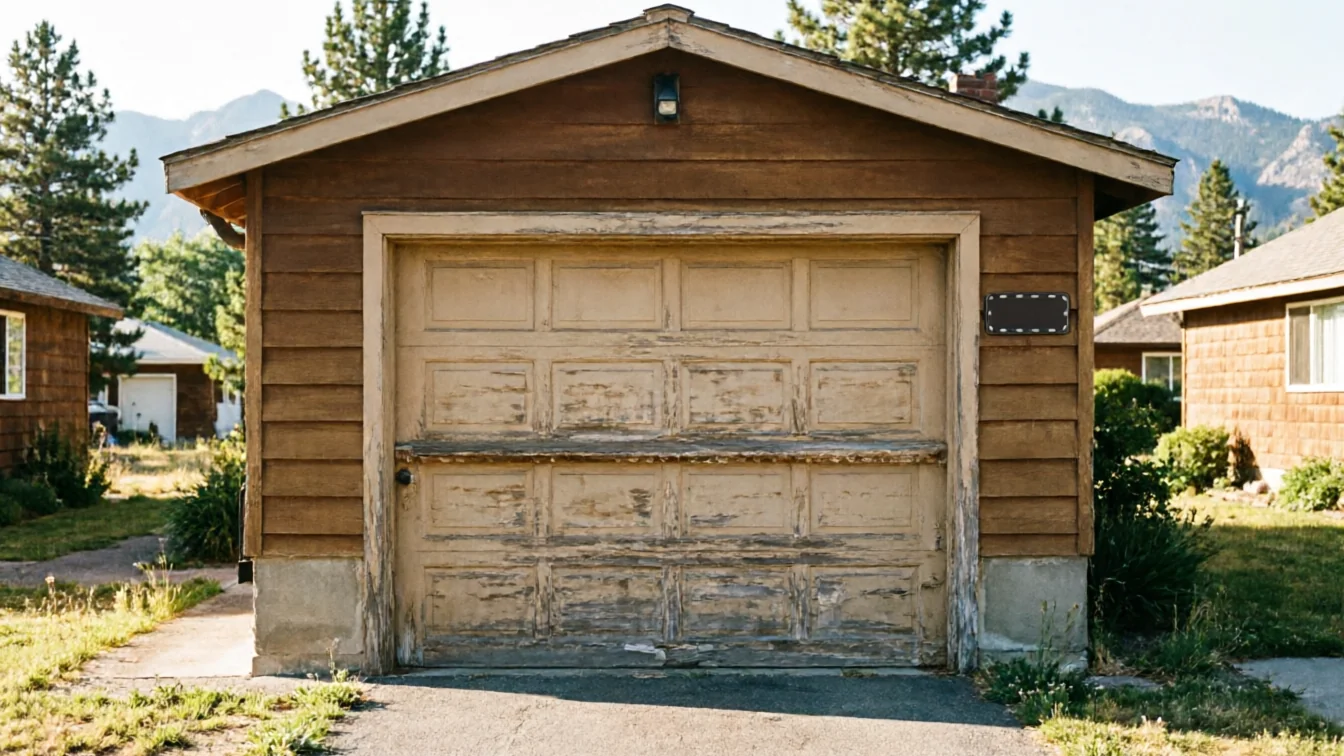
Greeley, CO · Garage Door Service
Is Your Greeley Garage Door Worth Repairing, or Time to Replace It
A look at why Greeley's 1975-2012 housing stock and cold-severe winters change the repair-vs-replace math on an older garage door, from Greeley Garage Door Pros.
- Repairs & new doors
- Springs & openers
- Serving 5 nearby communities
Where People Go Wrong
Most houses in the Greeley service area went up between 1975 and 2012, with the median build year sitting around 2002. That means the garage door on a typical Greeley house isn't a fragile wood-panel antique - it's a steel, foam-core door from an era that built them to last. The mistake we see is homeowners assuming any noise or stuck panel means the whole unit is done.
Across the 12 named areas that make up most of Greeley's 2000s-era housing stock, the doors share the same basic bones: steel sections, standard torsion springs, a chain or belt-drive opener bolted into a garage that's rarely insulated. When one part fails - a roller, a cable, a single bent panel - the door itself is usually still sound. Tearing out a 15-year-old steel door over a $40 roller is money you didn't need to spend.
The flip side is also true. If a door from the early end of that 1975 build window is still running its original hardware, replacing worn parts on a door that old starts to cost more over a few years than one new unit would. Age alone isn't the test - what's actually broken is.
What You Pay
We're not going to put a number here we can't stand behind - every door and every failure is different, and quoting a flat price without seeing the hardware would be a guess, not a fact. What we can tell you is how the decision gets made.
The service area has 44,922 households and 30,140 owner-occupied houses, with a median household income of $103,356. That's relevant because it shapes what "worth it" means here: a repair bill that would be a hard stretch in a lower-income area is often a reasonable call for a Greeley household weighing a $200-300 spring job against a $1,500+ full replacement. We walk through that math with you before we touch the door, not after.
The honest limitation: if your door is from the early end of the 1975-2012 build range and the opener, springs, and track are all original, we'll likely tell you replacement makes more sense than a parts rebuild. We'd rather say that up front than sell you a repair that doesn't hold.
The Problem
A door built during Greeley's main construction wave - steel skin, foam or no insulation depending on the build year, standard-lift torsion spring - was engineered for a 2000s-era house, not for twenty-plus years of use in a severe cold climate. That combination is where the wear shows up.
Steel contracts in the cold. On a door from that median-2002 build year, the panel seams and roller tracks were set at installation tolerances that assumed normal seasonal movement, not the swing a cold-severe winter puts on them. Over enough winters, the torsion spring - doing the same job it did when the house was new - starts to fatigue faster than it would in a milder climate.
The result isn't usually total failure. It's a door that's noticeably heavier to lift by hand, an opener straining on cold mornings, or a spring that lets go without warning on a January morning. None of that means the door is bad. It means the hardware has done its full service life in tougher conditions than it was rated for, and it's time to look at what's actually worn versus what's still good steel.
What the Weather Here Does to It
Greeley sits in a climate band rated cold and severe, and that's the single biggest factor in how a garage door here ages compared to one in a milder spot. Hardened lubricant on the torsion spring and rollers is the first thing to go - grease that's fine at 50 degrees turns stiff at well below freezing, and a stiff spring doesn't cycle evenly.
For doors built in that 1975-2012 wave, most are now old enough that they've logged two decades or more of freeze-thaw cycling. Steel doesn't fail all at once from this; it fatigues. A torsion spring rated for a certain number of cycles under normal conditions gets through fewer of them when the metal is contracting and expanding across a wide temperature swing every winter.
We're not going to tell you to re-lubricate every month - that's generic advice that doesn't match how most people actually use a garage. What does matter here: a yearly check before winter sets in, on a door that's already put in 10+ cold winters, catches a fatiguing spring before it snaps instead of after.
Frequently asked questions
How old does a garage door have to be before it's not worth fixing?
Age alone doesn't decide it - what's actually broken does. A lot of Greeley houses have doors from the 1975-2012 build wave that are still structurally sound steel. If the springs, track, and opener are all original on a door from the early end of that range, replacement usually pencils out better than a string of repairs.
Why does my spring keep breaking every winter?
Greeley's cold-severe climate band puts torsion springs through harder freeze-thaw cycling than a milder climate does. Cold-stiffened grease and steel contraction mean a spring already near the end of its rated cycles tends to fail in winter rather than summer. It's wear, not a defect.
Can you just give me a price over the phone?
Not honestly, no. Door age, hardware condition, and what's actually failed all change the number, and we'd rather look at it than guess. We can tell you the general repair-vs-replace math for a door from your home's era once we see what's there.
Related garage door services in Greeley
More garage door guides
Book garage door service in Greeley
Call now or request a quote - tell us what the door is doing and where you are.