
Greeley, CO · Garage Door Service
Panel Replacement for Eaton's Early-2000s Garage Doors
Eaton homes mostly date to the early 2000s, not the older stock seen elsewhere in the service area. We travel from Greeley to replace dented or rusted panels on that generation of door.
- Repairs & new doors
- Springs & openers
- Serving 5 nearby communities
Why It Happens Here
Eaton's housing stock centers on a median build year of 2001, almost exactly matching the 2002 median across the wider Greeley Garage Door Pros service area. That's a tighter cluster than you'd guess, because the full service area spans construction from 1975 to 2012 across twelve named towns. Eaton didn't catch much of that older end or the newest end - it landed squarely in the 2000s building run, and most of the garage doors out here reflect that.
What that means for panels: factory foam-core steel sections, usually 24 or 25 gauge, installed as a matched set with a specific embossing pattern and panel height. Twenty-some years on, the foam bond starts to separate from the steel skin, which shows up as a soft spot or a section that flexes when you push on it. Add the cold-severe winters this area sits in, and road splash plus snowmelt sitting against the bottom panel accelerates rust from the inside edge out, even on doors that still look fine from the driveway. A single damaged panel on a door this age is rarely a one-off repair - the rest of the panels are aging at the same rate, which changes how we'd recommend handling it.
Doing It Yourself
Buying a single replacement panel online looks simple until it shows up and the embossing, the color, or the panel height is off by enough to be obvious once it's hung next to the originals. Doors from Eaton's 2000s building era went up under several different manufacturers, and matching a single panel to a 20-year-old run is hit or miss even when you've got the model number.
The honest limitation here: we don't always have an exact match either. On some jobs, a close color match is the realistic outcome, not a perfect one, and we'll tell you that before you commit to the job rather than after. If the mismatch bothers you, replacing both panels on that side - or the full door - is sometimes the better call, and we'll say so.
The part that actually hurts DIYers is the lift mechanism. Pulling a bottom panel means disconnecting the bottom bracket, which is under spring tension on a working door. That's not a job to improvise with the door still loaded. If you're set on doing the swap yourself, at minimum disconnect the opener and block the door open before you touch the bracket.
Time on the Job
We run this job out of Greeley, about 8 miles from Eaton, so the drive adds a bit to the morning compared to jobs closer to the shop - not enough to change the plan, but enough that we build it into the schedule rather than treating it as a same-neighborhood stop.
Once we're on site with the right panel in hand, swapping a single section on a double door usually runs a couple hours: disconnect the opener, pull the damaged section, transfer the hinges and rollers, reseat the track, reconnect. Where the timeline stretches is before we ever get to your driveway. If your panel needs to be special-ordered to match an early-2000s profile, that lead time runs longer than a stock item - sometimes a lot longer, depending on what the manufacturer still carries for a pattern that old. We'll quote that lead time up front once we've identified the panel, not after you're already waiting on it.
How It Shows Up
On doors from this era, the failure pattern is pretty consistent. The bottom panel goes first, almost always from the inside out - moisture works behind the steel skin where it meets the foam, and in a cold-severe climate that cycle of freeze and thaw speeds up the separation. You'll notice a slight bow, a spot that feels soft under a thumb, or a hairline rust line along the bottom seam before it ever becomes a visible hole.
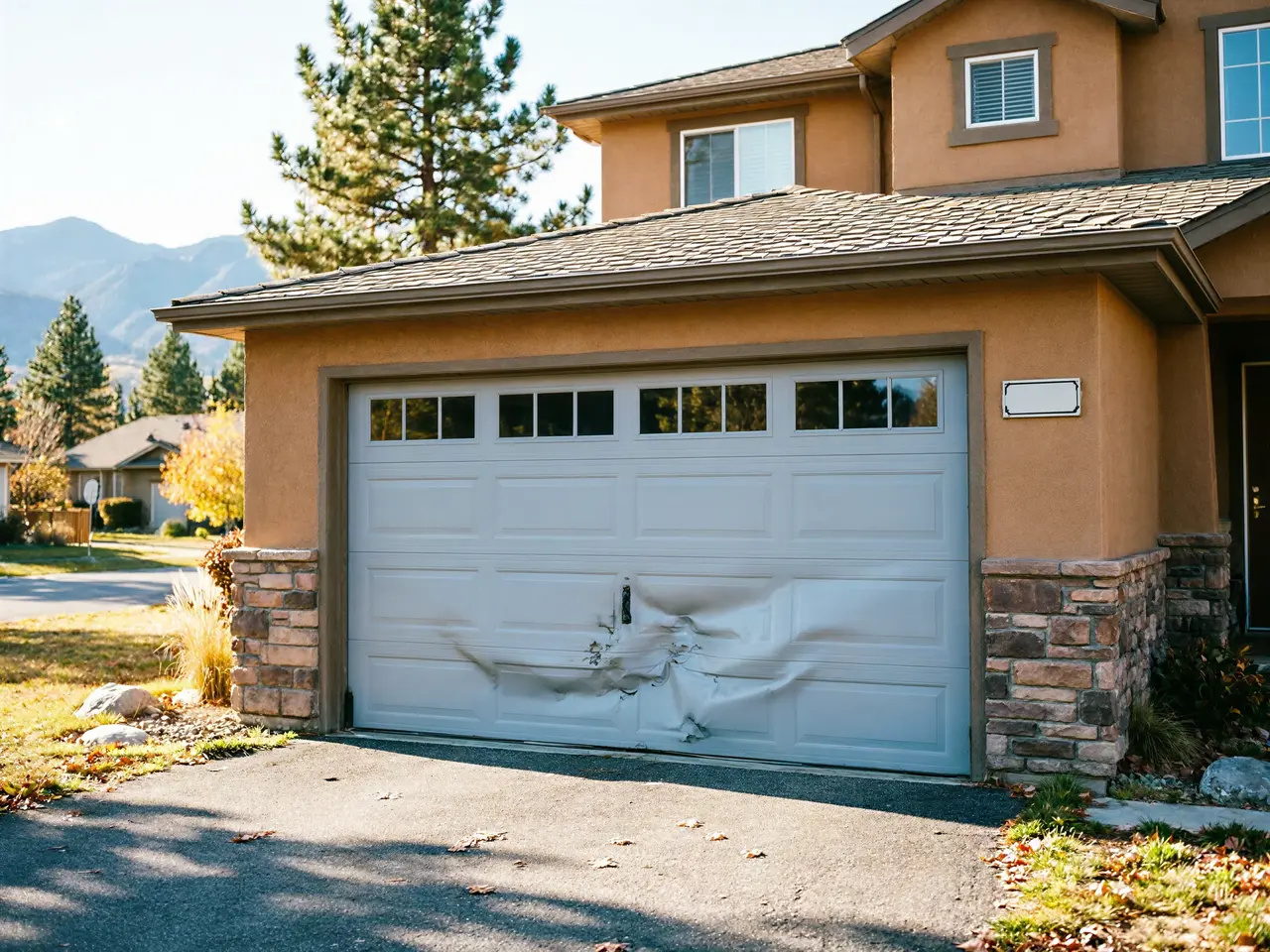
The middle panels usually hold up better unless something hit them - a backed-into car, a basketball, a ladder. Those come in as a single dent or crease rather than the gradual rust pattern on the bottom.
Eaton is a small town by household count, a couple thousand compared to the tens of thousands across the whole service area, and the median income here runs a touch above the service area average. That doesn't change how the door fails, but it does mean most owners here are maintaining the house rather than letting it go, so when a panel does show damage, it's usually caught early rather than after it's spread to the hardware around it.
Frequently asked questions
Will a replacement panel match the rest of my door exactly?
Sometimes, but not always. Doors from Eaton's early-2000s building era came from several manufacturers, and after 20 years a perfect color and texture match isn't guaranteed. We check what's available before quoting and tell you honestly whether it'll be a close match or a visible difference.
How long does a single panel replacement take once you're on site?
Usually a couple of hours for a standard panel swap on a double door, once we have the correct section in hand. The variable is sourcing the panel itself if it has to be special-ordered to match an older profile.
Why does my bottom panel always rust first?
Moisture collects along the bottom seam where the steel skin meets the foam core, and this area's cold winters add a freeze-thaw cycle that speeds the process. It usually starts as a soft spot or hairline rust before it becomes visible damage.
Do you travel to Eaton for this kind of repair?
Yes, we run this job out of Greeley, about 8 miles out. There's no local branch in Eaton, so travel time factors into scheduling, but the repair itself is handled the same way as jobs closer to the shop.
Book garage door service in Greeley
Call now or request a quote - tell us what the door is doing and where you are.